
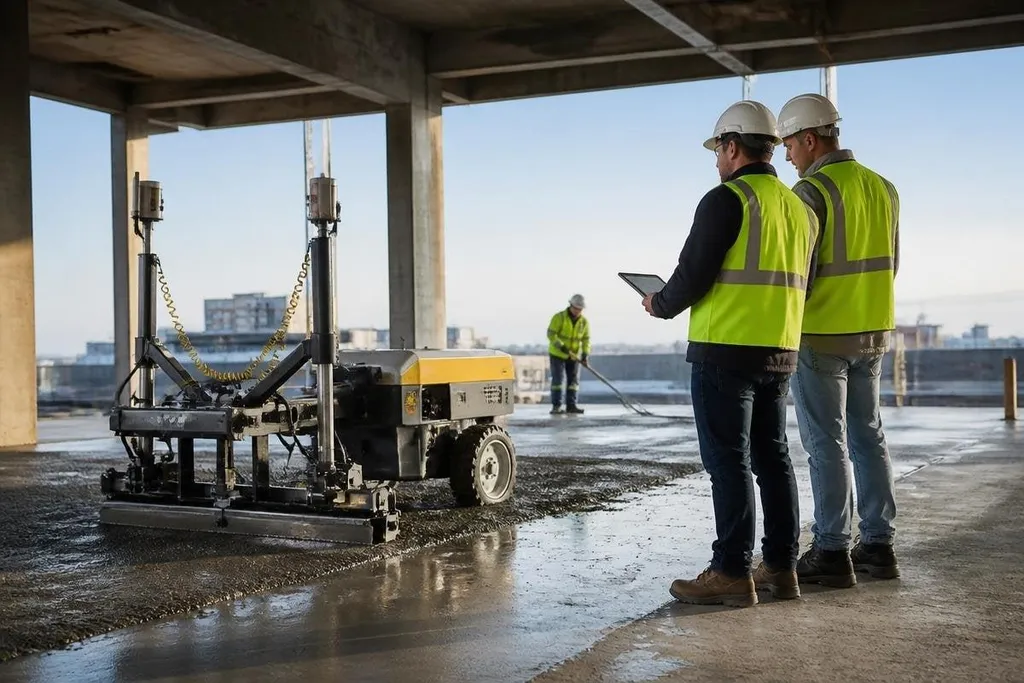
A construction robot has a better chance of earning money when it repeats one site task than when it tries to act like a general worker. The business opportunity sits in the job it completes, the cost it cuts, and the person who pays for the result.
- Best starting point: pick a repeated task with clear output, such as layout, brick placement, or site inspection.
- Main buyers: contractors, equipment rental firms, and construction material suppliers.
- Big limit: a robot still needs site access, trained staff, maintenance, and a safe work area.
Sell the work package
A machine sale puts the buyer in charge of training, repairs, software, and daily use. A work package keeps those jobs with the robot company and charges for a defined result, such as square meters mapped or blocks placed.
That model fits construction because sites change often. A contractor may need a robot for one project, then move it to a different site with new drawings, ground levels, and safety rules. A rental or service firm can handle transport, setup, operator training, and removal after the job ends.
The contract needs a clear unit of work. Possible measures include hours on site, completed floor area, installed components, or checked locations. Each measure gives the buyer a way to compare the robot's cost with the current labor and equipment cost.
Four jobs with a clear buyer
The strongest openings are tasks where the robot can repeat a motion and a supervisor can check the result. That points toward narrow services rather than a machine that claims to cover the whole build.
Layout robots can mark points, lines, and reference locations from a digital plan. The contractor needs accurate marks before drilling, cutting, or installing frames. The value comes from fewer layout errors and less time spent moving between locations.
Bricklaying systems can place units along a prepared wall line. Their business case depends on steady material supply, a stable work surface, and a design that matches the robot's reach. A service company may charge by wall area, with a crew handling material loading and checks.
Inspection robots can carry cameras, LiDAR, or other sensors through areas that are hard to reach. They may support progress records, condition checks, or measurements before later work covers the surface.
The customer could be a contractor, engineer, insurer, or building owner, but each will ask for different records and accuracy. That changes the service plan and the price of each inspection.
Earthmoving automation has a larger possible contract value, yet it also brings more risk. A system that guides a loader or excavator must work around people, vehicles, changing ground, and other machines. That makes site planning and human supervision part of the product.
Where the business can fail
A robot may work well in a controlled test and still lose money on a live site. Uneven ground can slow movement. Dust can affect cameras and sensors. Rain can change traction and visibility. Materials may arrive late, forcing an expensive machine to wait.
The robot company also needs a plan for the unplanned work. A worker may need to clear debris, move a barrier, check a mark, or stop the machine when another crew enters the area. Remote control can help, but it adds a trained operator and a reliable network to the cost of each job.
Those extra people and network needs give the buyer another item to check before signing a site contract. Reporting on construction robots at Robot24.com can connect claims about remote control with named machines, job sites, and test results. That evidence leads into the next question: what does the robot cost to run?
Price is another test. The buyer will compare the full job cost with wages, equipment rental, setup time, repairs, insurance, and delays. A robot that costs less to operate but needs two people beside it may not reduce the bill.
A practical buying checklist
Before funding a construction robot service, check these points:
- Name the task: write the exact output the robot must complete and how a supervisor will check it.
- Set the site limits: record floor area, surface type, weather exposure, access routes, and nearby people or vehicles.
- Count the human work: include setup, loading, supervision, recovery, charging, cleaning, and repair time.
- Choose the charge unit: use hours, area, installed parts, or inspected locations, then set a clear rework rule.
- Run a paid trial: test one defined site task before buying machines or promising a large contract.
- Plan the failure case: decide who stops the robot, who fixes it, and what happens when the robot cannot finish.
I'd back a construction robot company that starts with one paid task and proves its cost on several sites. A broad machine with no clear billing unit has a harder sale, even if its hardware works.
The next useful proof is not a polished demo. It is a signed work order showing the task, the human hours, the robot hours, the rework, and the final cost.